Bad Managers

Today I am trying not to worry too much over the government’s bad management of the coronavirus pandemic as I struggle with the near impossibility of meeting a work deadline due to my own poor time management.

Posted in Crazy Me | 1 Comment

Nature Report

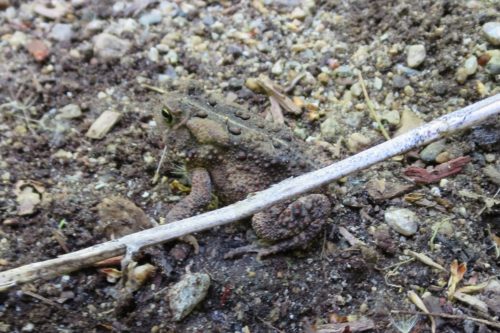
The crocuses have been blooming for several days, and the daffodils are budding. No sign of violets in the yard yet, but I found tiny telltale leaves of dandelions, chickweed, clover, cinquefoil, and ground ivy. And the peepers have started to sing!

Posted in Uncategorized | Leave a comment

Absentminded Antiprocrastination

Being a mom has eroded my procrastinating tendencies. I still look at unpleasant chores, such as the dishes, and say to myself, “I can’t handle this right now.” But then ten minutes later, the work is done. I’ve gotten so used to the inevitability of chores that I do them absentmindedly, even after having given myself permission not to.

Posted in Crazy Me | Leave a comment

Cross-Stitch Pattern #2

Pattern #2 Successfully Test-Stitched
(pattern based on a Calamityware design)
Posted in Uncategorized | Leave a comment

Awkward and Weird

Heard around the house:

Awkward turtles make weird babies.

From “The Llama Song
Posted in Livia Says, Marshall Says | Leave a comment

Cute Mistakes

“Orson Scoot Card” is a cute typo. I found it on one of my own blog pages. Why can’t all my mistakes be so cute? If they were, maybe I wouldn’t mind them so much.

Posted in Crazy Me | Leave a comment

Thoughts on Shopping

  • I’m beginning to think that there are four sizes of bra: the size you need, the size you think you are, the size that is too big, and the size that is too small. No matter what size I think I am, the bras of that size are always too big or too small. No bra is ever the size I need.
  • I am sick of ridiculous pricing. Why would any store price an item at $56 and then sell it to me for $8? But they do it. Over and over again. So I never buy anything when I first see it. I wait for prices to drop, for big sales, and for coupons. But it would be so much simpler for everyone if the stores just priced things appropriately.
  • I used to think that, when I felt like I was burning up and dying of thirst in the store, it was because they’d turned the heat up too high by accident. Now that every store has a display of pricey bottled water at the register, I’m beginning to suspect it’s not an accident.
  • What is the point of limiting the number of items that I can take into the dressing room with me? I mean, how many sweaters do they really think I can hide in my purse or shove down my pants? Dressing room limits (e.g., 6 items or less) are extremely inconvenient. Women’s clothing sizes never run true, so I have to bring at least two sizes of any item I’m interested in buying, and if it comes in multiple colors, I want to compare how they look on me. I don’t want to have to keep going back and forth, in and out of the dressing room, getting dressed and undressed, all day long. So, unless they’re willing to station someone outside the dressing room to fetch things for me, they should let me bring in everything I want to try on. Seriously!
  • And what ever happened to all the mirrors? It used to be that there were mirrors all over the place in the clothing department so that you could hold a garment up in front of you or try it on over your clothes to see how the color looked on you. Now, in many stores, there aren’t any mirrors, forcing us to bring more items to the dressing room, where they limit how many we can bring with us. Bring back the mirrors!
Posted in Crazy Me | Leave a comment

Don’t Be Cool

When it comes to music, there are two types of cool. There is a brand of cool that is naturally lofty and doesn’t care what anyone else thinks. People with that kind of cool know what’s good, they seek it out, and they point the way for everyone else. That kind of cool is to be admired. It is also rare.

For everyone else who aspires to be cool, there’s only one way to do it: at everyone else’s expense. These people elevate their own tastes by trampling all over everyone else’s. They tell you what you should like and punish you if you don’t. They do it well enough that other people buy into it and perpetuate a cycle of meanness that we’d all do better without.

When you hear anyone trashing someone else’s tastes in music, you can be sure that those people are that shitty, manufactured brand of cool. They’re not the real deal. If they really loved music and knew what was good, they wouldn’t need to tear other people’s music down.

I’m not saying that I’ve never trashed anyone’s music. I’ve been alive long enough to make some mistakes. But the older I get, the more I realize that what you like depends on your background, your mood, where you are in life, and who you’re with. Your likes change over time. That’s as it should be, so you don’t owe explanations or apologies to anyone for the music that you like. Ever.

So don’t try to be cool. Either you already are, or your attempts to be cool will only hurt you and/or other people. And anyway, being cool is a lot less important than listening to and enjoying whatever type of music you naturally like.

Posted in Uncategorized | Leave a comment

Norse Stuff

We should all be more like the dwarves in Rick Riordan’s fictional worlds.

Dwarves are craftsmen . . . . We’re serious about the things we make. You humans–you make a thousand crappy chairs that all look alike and all break within a year. When we make a chair, we make one chair to last a lifetime, a chair unlike any other in the world. Cups, furniture, weapons . . . every crafted item has a soul and a name. You can’t appreciate something unless it’s good enough for a name.

Blitzen, answering the question of why dwarves name their goblets
Posted in Reading | Tagged | Leave a comment

February Reading

These books arrived from the library last week: Parable of the Sower by Octavia E. Butler and The Fifth Season by N.K. Jemisin.

For Black History Month this year I decided to actively celebrate by reading some books by black authors. In addition to a collection of poetry by Langston Hughes, I chose the two books pictured above. Both Butler and Jemisin became famous for writing in a genre that is historically very white and very male, and I was interested to see how these two women of color, born a generation apart, would each approach the SFF genre. I ordered the books separately, without having seen the covers, so it’s serendipitous that Jemisin wrote the introduction to this edition of Parable of the Sower.

I had been meaning to read Octavia Butler’s work for a long time, ever since Orson Scott Card praised her to the moon and back in How to Write Science Fiction and Fantasy. He mentioned her work repeatedly and presented excerpts from her book Wild Seed, about which he wrote, “I’ve chosen this book because nobody handles exposition better than Butler–and also because it’s a terrific novel that you ought to read for the sheer pleasure of it.” About herself, Butler once said…

Who am I? I am a fifty-three-year-old writer who can remember being a ten-year-old writer and who expects someday to be an eighty-year-old writer. I’m also comfortably asocial–a hermit in the middle of Seattle–a pessimist if I’m not careful, a feminist, a black, a former Baptist, an oil-and-water combination of ambition, laziness, insecurity, certainty, and drive.

I love that last part, the “oil-and-water combination of ambition, laziness, insecurity, certainty, and drive.” I feel a kindred spirit there. And I was blown away by her writing from the first paragraph of Parable of the Sower

I had my recurring dream last night. I guess I should have expected it. It comes to me when I struggle–when I twist on my own personal hook and try to pretend that nothing unusual is happening. It comes to me when I try to be my father’s daughter.

It’s remarkable how much this paragraph tells us about our protagonist Lauren Olamina, and the imagery of twisting on a hook grabs the imagination. The story is set in the 2020s (roughly 30 years in the future, from the author’s point of view). Global warming has turned southern California into a tinderbox, both literally and figuratively. Food and water are scarce and expensive, and jobs are also hard to find. Wealthier communities have walled themselves off from the rest of the world, which has turned so violent that everyone who can afford a gun has one.

Lauren is a black teenager and daughter of a Baptist minister. She has a condition called “hyperempathy,” which causes her to feel (or to imagine that she feels) other people’s pain and pleasure. She lives with her family in a close-knit, walled-off community, but she knows the wall cannot protect them indefinitely. In musing on their perilous state, she has begun to formulate her own religion, called Earthseed, the foundation of which is that God is Change.

All that you touch
You Change.

All that you Change
Changes you.

The only lasting truth
Is Change.

God
Is Change

Lauren’s goal is to build an Earthseed community somewhere up north, where there is said to be more water and opportunity, but first she must survive.

I read this book quickly, because it was good, and I gave it an A grade. But, though it’s well-written and powerful, it’s not for the squeamish. Butler does not shy away from human cruelty, and the story is filled with rape, murder, and even cannibalism. So I can only recommend Parable of the Sower to those readers who have the heart and stomach to endure reading about such things.

Next up is The Fifth Season by N.K. Jemisin. I started following Jemisin on Twitter by some accident of Fate, before I even knew who she was. I have since learned that she is first author to have won the Hugo Award for Best Novel three times consecutively. The awards were for the three books of this series, so I have every reason to expect that this book will be good.

Posted in Reading | 2 Comments