
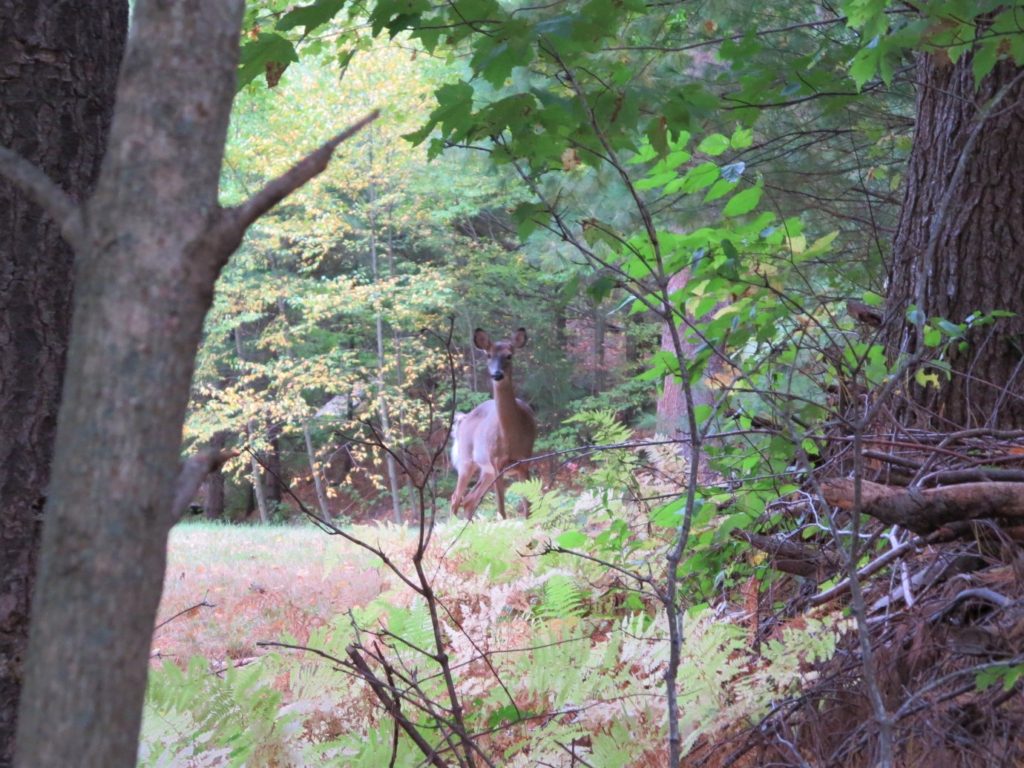


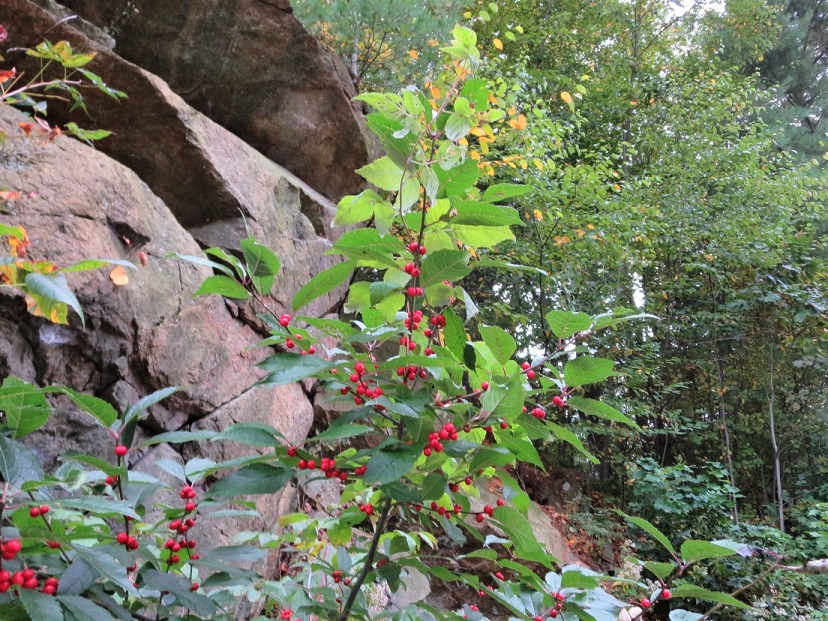
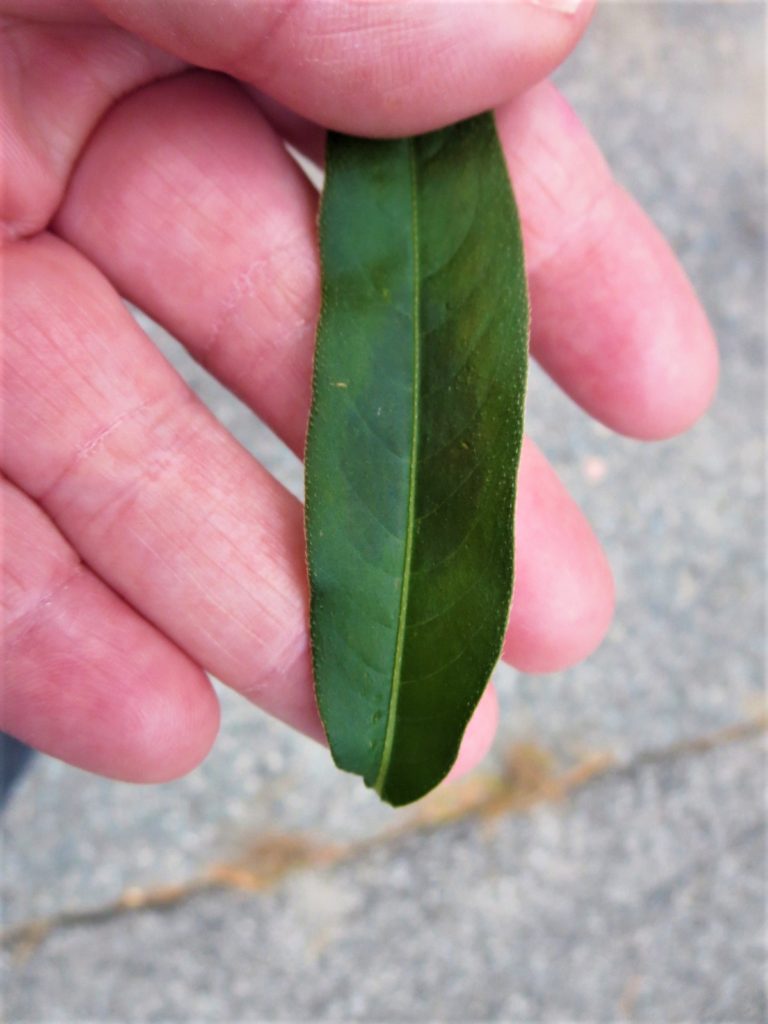
Yesterday I went for a walk in the woods behind my house. It was a nice day, and I wanted a good stretch for my legs, so I went farther than I usually do. I forgot, though, that it’s harder to find my way at this time of year. I’m used to walking in the winter, when there are no leaves on the trees and more of the rocky landscape is visible. Snow on the ground also allows for easy backtracking. The woods in early autumn are better at concealing their secrets, and I got lost.
I wasn’t worried per se, but it was late afternoon, and the clouds overhead threatened rain. I knew that, if I just kept walking, I’d eventually come to a place that was familiar or I’d reach a road. But I also knew that when the light failed I would start to get scared. I didn’t even have my phone with me (stupid!), or a light, or anything else that would be useful, except my head and my feet.
So I walked and walked and I did eventually come to a place I recognized: the Abandoned Truck. The Abandoned Truck is near what I call Oil Can Swamp, which is, as you might guess, a marshy area where someone dumped a bunch of oil cans (people can be such jerks!). I don’t usually go there, because it’s depressing, but I knew exactly where I was. Given a map, I could have pinpointed my position on it. I was on the side of the woods opposite from my house. But, it had been years since the last time I was there, and I wasn’t sure which paths to take to get home. Ugh.
I was near a road, though, so I took it. The way home by road was less than direct, and the steady stream of speeding rush-hour traffic made the trek seem even longer. Main roads are convenient for driving but unpleasant for walking. They are also dangerous, as silently attested to by the dead raccoon and opossum I saw along the way. When we are driving, we don’t realize just how fast we are going compared to everything else, or the force with which we move the air, how our hurtling cars rock the world as they fly through it. From the pedestrian’s point of view, it is terrifying.
I was mindful of the traffic, though, and I made it home safely. I got quite a lot of exercise and fresh air along the way. And, because the story ends that way, I’m calling it a good walk.
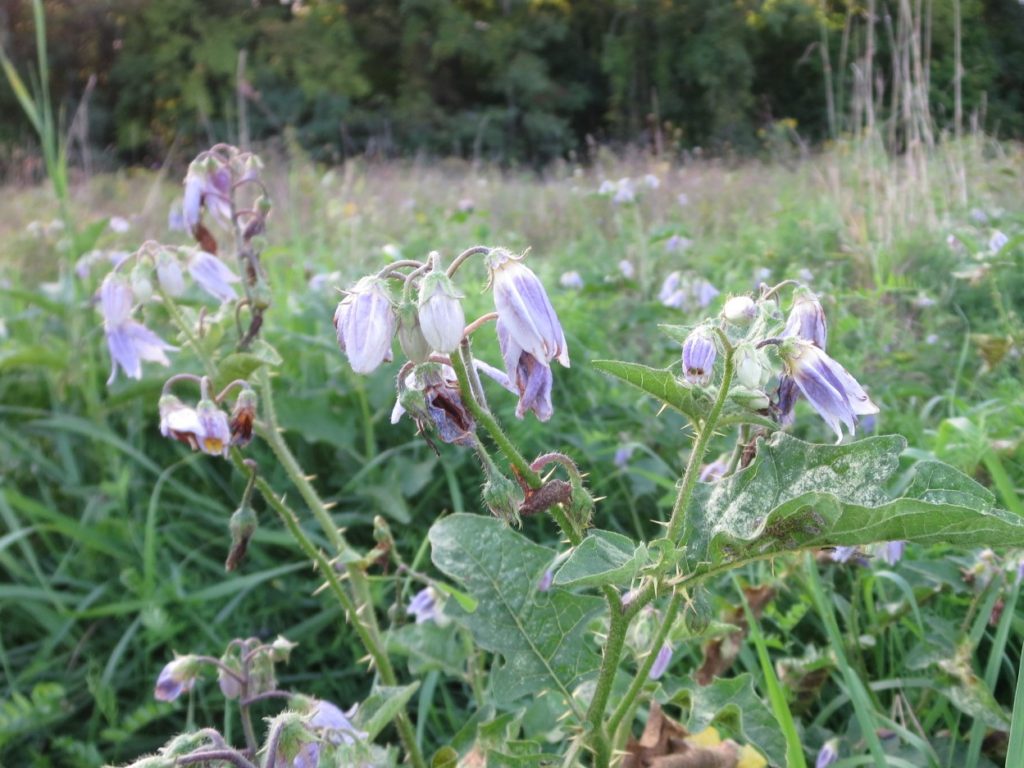
This rather scary plant (look at all those thorns!) is a type of wildflower that I first spotted a couple of years ago but never got around to identifying. When I saw it this year, it was late in the day, so this is not a good picture of the flowers. It does give a good idea of the plant’s overall appearance, though.
Seeing this plant’s flowers and leaf structure, I suspected that it was a nightshade. When I later saw its fruit, I was almost certain.
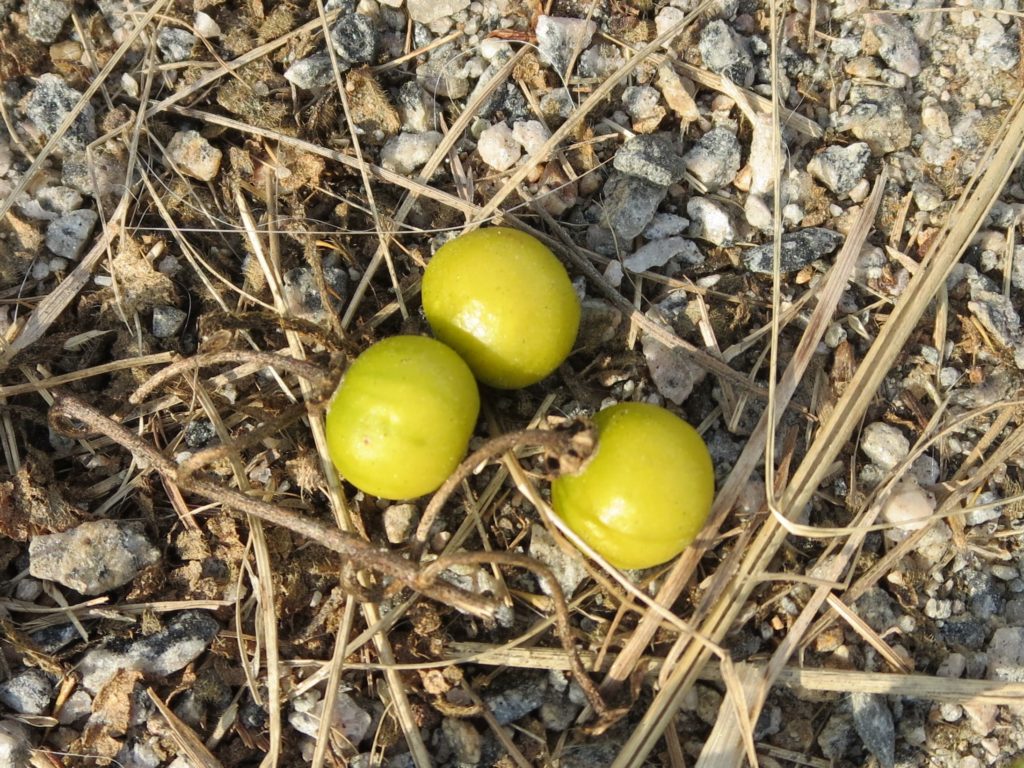
After researching this plant, I believe that it is horse nettle, which is indeed a nightshade. Horse nettle is not a very nice plant. Not only is it thorny, but it’s also poisonous. Horse nettle often ends up on lists of poisonous lookalikes because the fruit looks tomato-y (one of its common names “devil’s tomato”). Don’t let the fruit fool you. You do not want to eat any part of this plant, and neither does your horse, if you have one.
Good things about Writing for the Machine (a.k.a. social media):
Bad things about Writing for the Machine:
All the flowers of all the tomorrows are in the seeds of today.
I’m not going to get very far with cataloguing wildflowers if I keep dwelling on the ones I’ve already covered, but I did say that I’d look for “thumbprints” the next time I saw lady’s thumb. And the next time was this morning, because it grows in my yard. Or does it? I looked at several dozen leaves and not a single one had the mark on it.
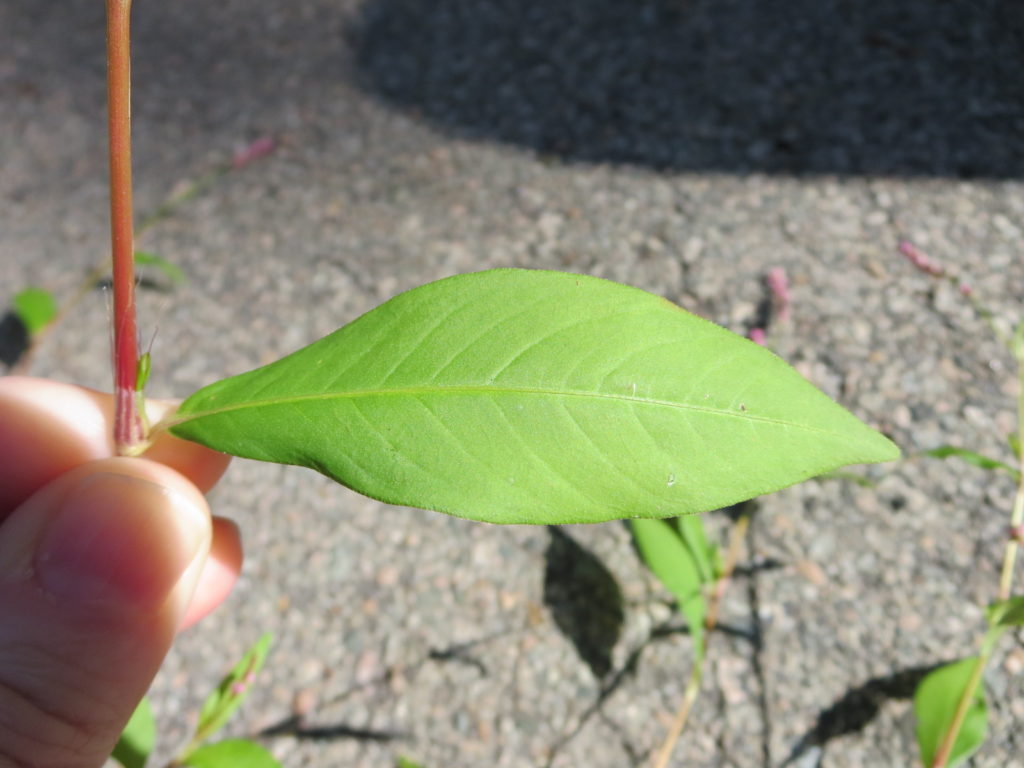
While I was researching smartweeds the other day, I believe what I read was that while some other smartweeds occasionally have the mark, the defining characteristic of lady’s thumb is that most of its leaves do have it. This plant in my yard is therefore probably not lady’s thumb.
So what is it? Perhaps the clue is to be found where the leaf meets the stem. The stem isn’t hairy or sticky (so I don’t think this is Pennsylvania smartweed, another lady’s thumb lookalike), but there are long bristles sticking out. You can see them more clearly here.
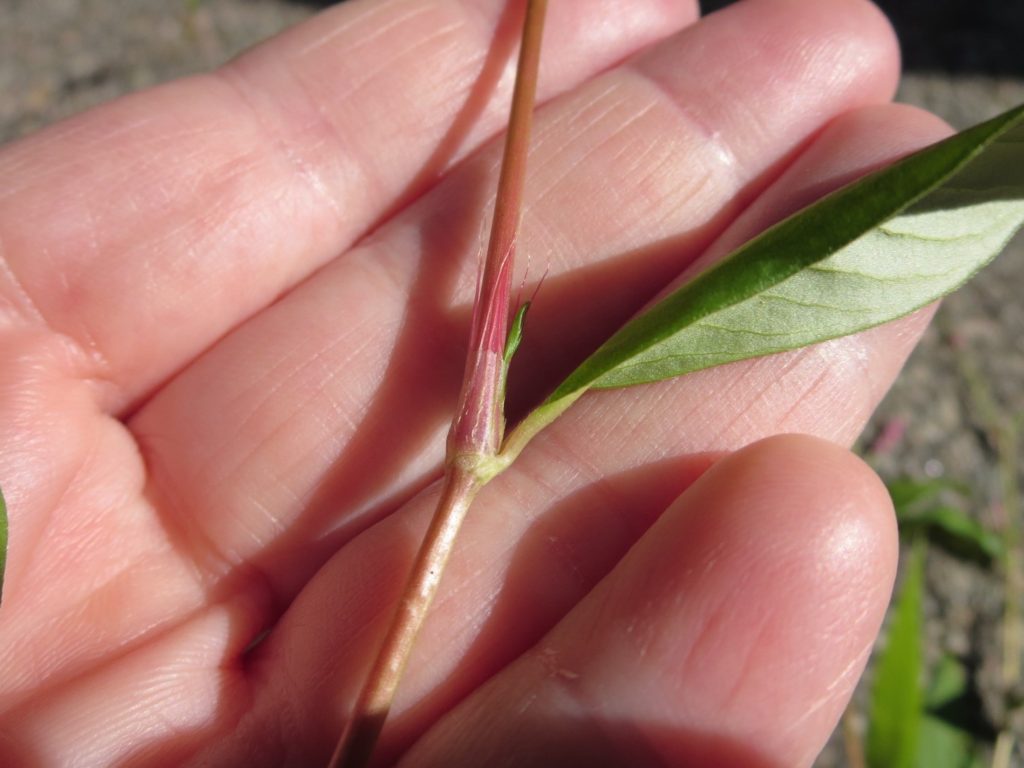
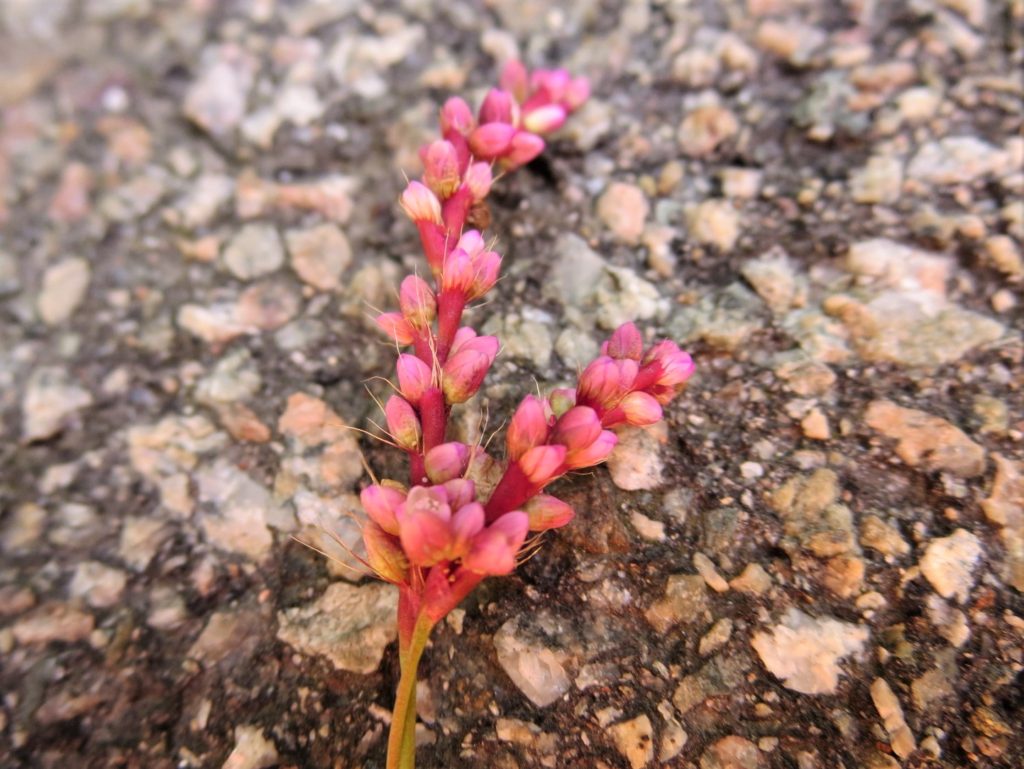
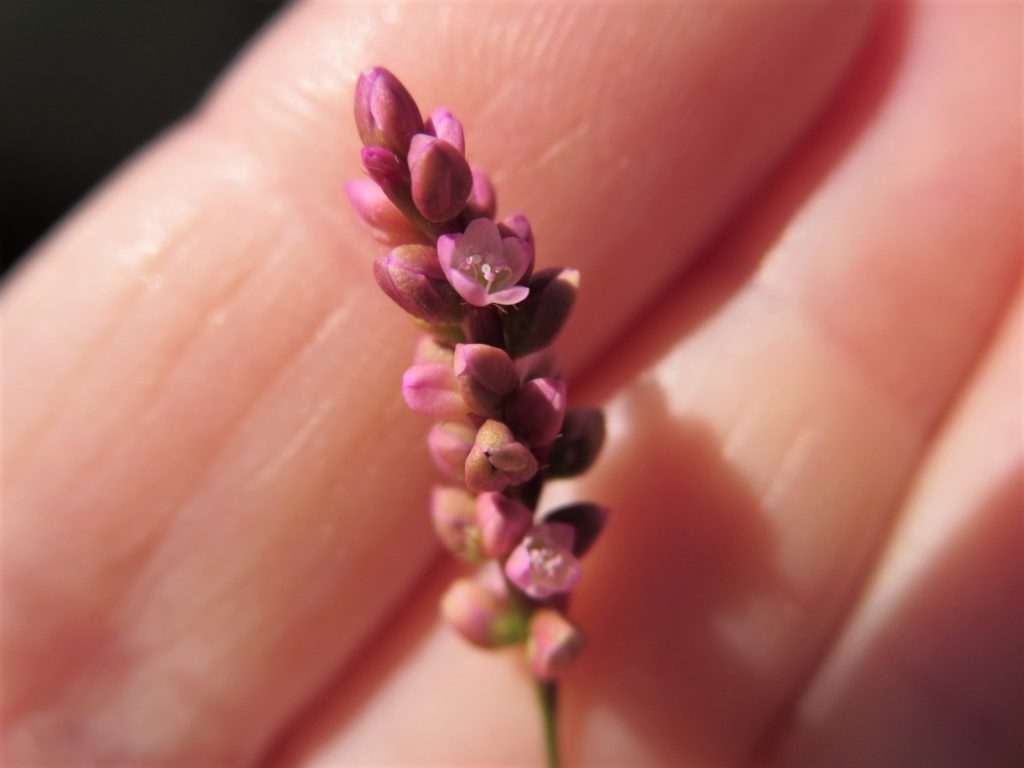
According to the Connecticut Botanical Society, what I probably have here is long-bristled smartweed (a.k.a. Oriental lady’s thumb), which they say can be identified by the “papery sheaths around the leaf joints with long, fine bristles at the top.” So, thanks to the alternative name, I can still call it “lady’s thumb.” Convenient!
But just in case you were wondering what the mark looks like, here you go.
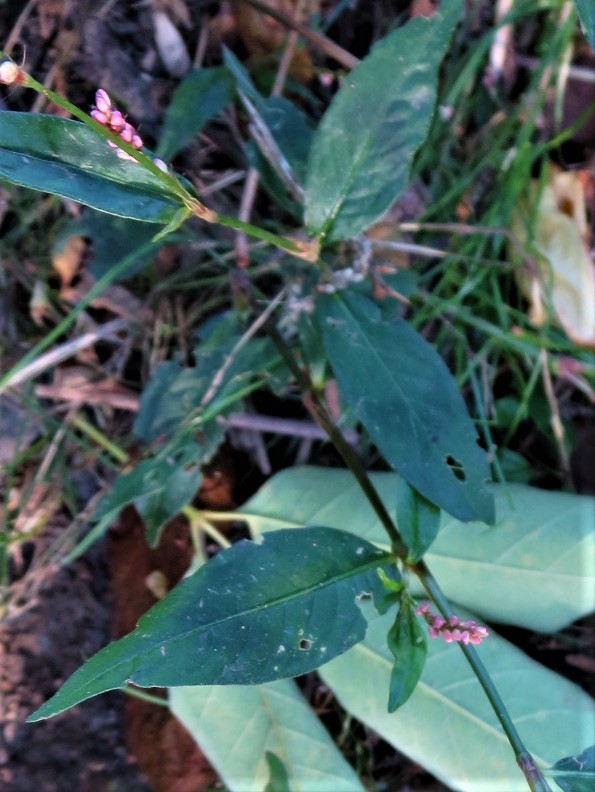
Now, remember when I said that dwelling on previously covered flowers was going to keep me from cataloguing other wildflowers? How wrong I was! Because I’ve got two more to squeeze into this post, thanks again to the Connecticut Botanical Society (to which I am sending tons and tons of psychic gratitude).
While on the webpage for long-bristled smartweed, I clicked on the link to the next flower from the same (buckwheat) family, thinking it might take me to another smartweed that I could use as a comparison. Instead, the link took me to this white flower, arrow tearthumb. Doesn’t it look a lot like this mystery flower I photographed earlier this month?
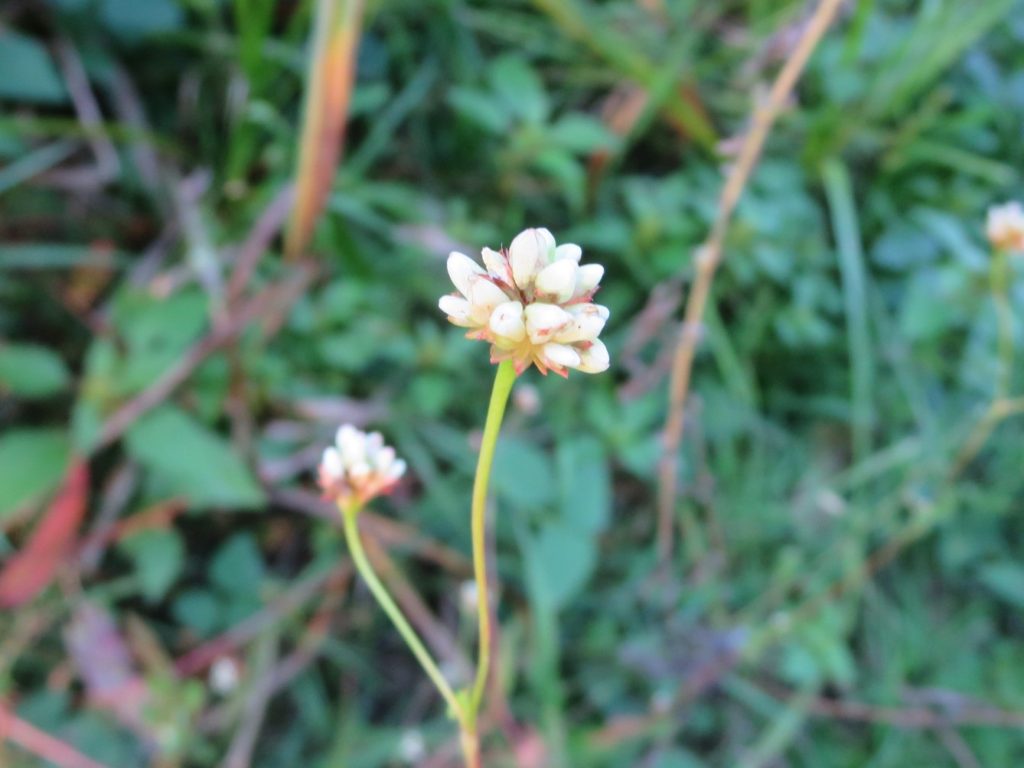
And I kept clicking on that link until I got to another plant I’d seen before, Japanese knotweed. I have noticed this stuff growing all over the place lately. I even took a picture of it today, thinking I should finally figure out what it was.
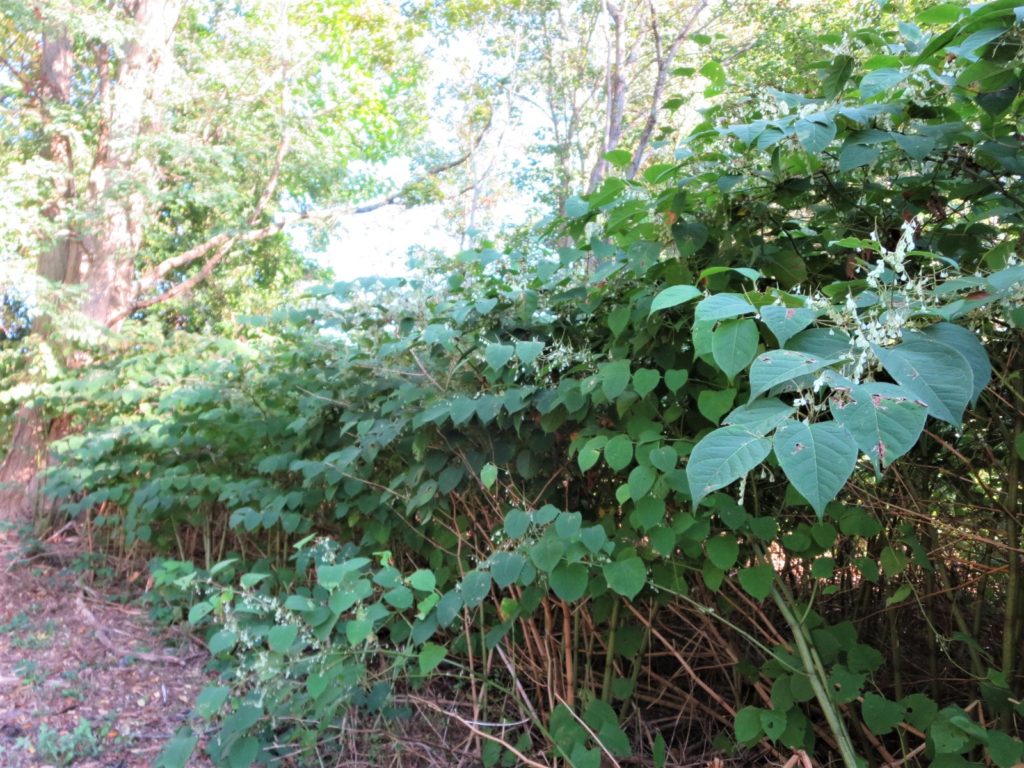
Japanese knotweed is apparently quite the invasive plant. That’s unfortunate, but at least I know what to call it now. It also has pretty flowers, and I especially love the seeds. I took a close-up picture of the seeds today, but it didn’t come out very well. I will try again on another day, and if the pictures come out nice, chances are you’ll see them!

I walked on a different path yesterday. I found many flowers, but most were types that I’d seen before. I was feeling a little disappointed, but just before my walk’s end, I spotted something new. This unfamiliar white flower was growing next to a familiar pink flower (lady’s thumb). My first thought was that the two plants looked related. But then, when I got home and searched through my handy-dandy field guide, though the book listed several related plants, none of them had white flowers that looked like this. How frustrating!
I tried the Internet, of course, but as it so often does, it got me turned around in the wrong direction. I was beginning to think that I wasn’t going to be able to identify this flower. Then I remembered that there was a good website for Connecticut wildflowers. We have many of the same plants here in Rhode Island, so it’s a good resource. I looked up “Connecticut wildflowers” and voila! My search engine presented me with the address for the Connecticut Botanical Society.
The Connecticut Botanical Society’s website is very useful. Browsing through all the white flowers took a while, but I found my plant, or at least its genus. I am certain now that my white flower is a smartweed, and as I had guessed, it is related to the lady’s thumb. I believe that it is mild water-pepper or another similar plant, such as dotted smartweed.
I am going to call it mild water-pepper and leave it that, rather than try to pinpoint the species more exactly. Years of plant identification have taught me that there are far more varieties of plants than most people realize. Even the plant that I called “lady’s thumb” might actually be a related plant, such as Pennsylvania smartweed. I am not interested in the extra work it would take to be absolutely certain. In some cases, it wouldn’t even be possible for an amateur such as myself, and usually, it seems to me, when species are very much alike, they are interchangeable in most ways. They are interchangeable for my purposes, anyway.
Regarding lady’s thumb, I had always wondered where its name came from. It doesn’t look very thumblike, does it? It turns out that the name is a reference to the leaf, which typically has a dark, thumbprint-like splotch on it. I have never noticed that feature before. I will look for it the next time I see this plant, and take pictures, of course!
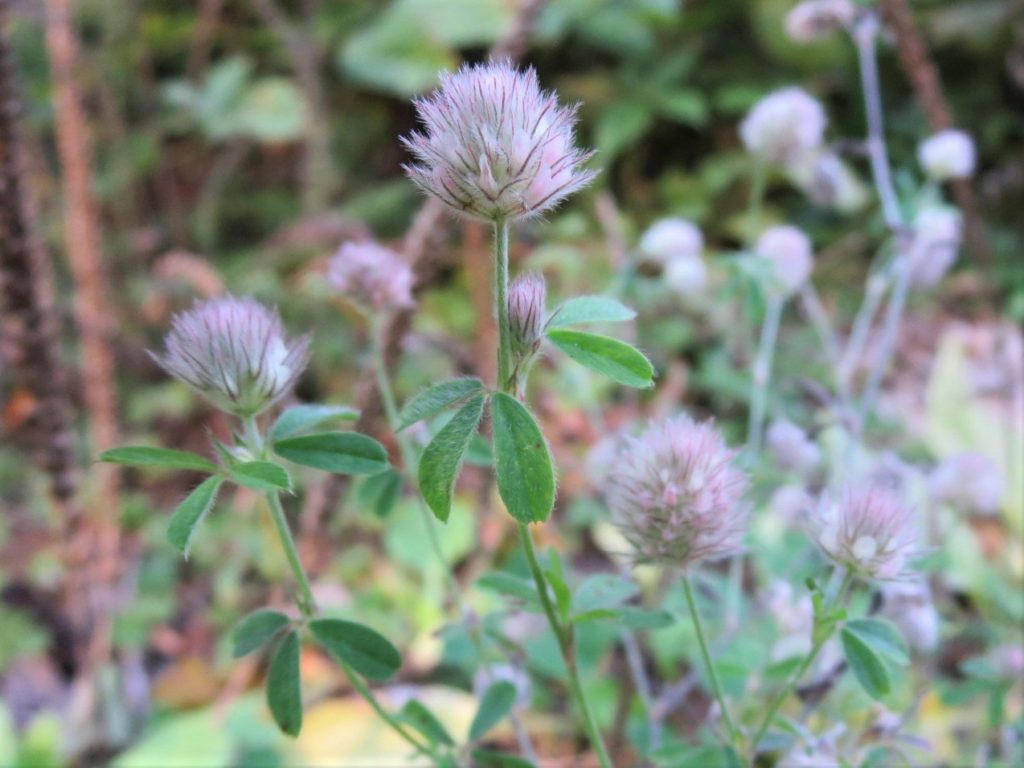
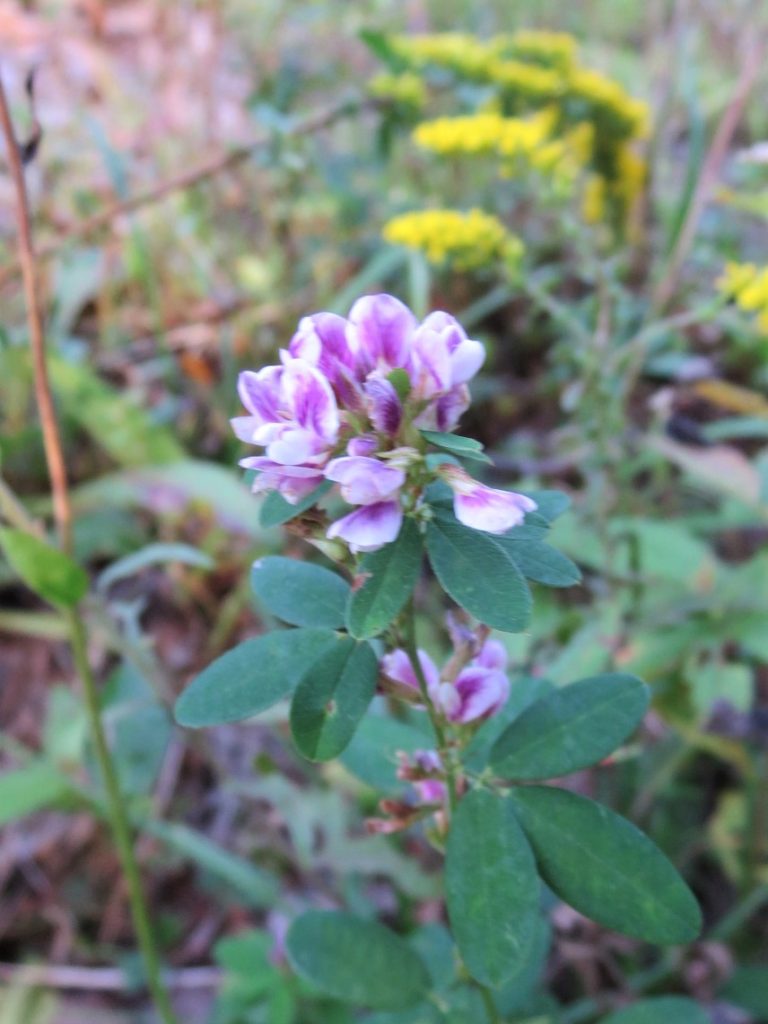
I enjoyed my recent walks so much that I wanted to document all the wildflowers that I saw. There were so many, I don’t know if I will be able to get to them all. It may help to group related plants together, and with that thought in mind, here are the four clovers that I found along the walking trail.
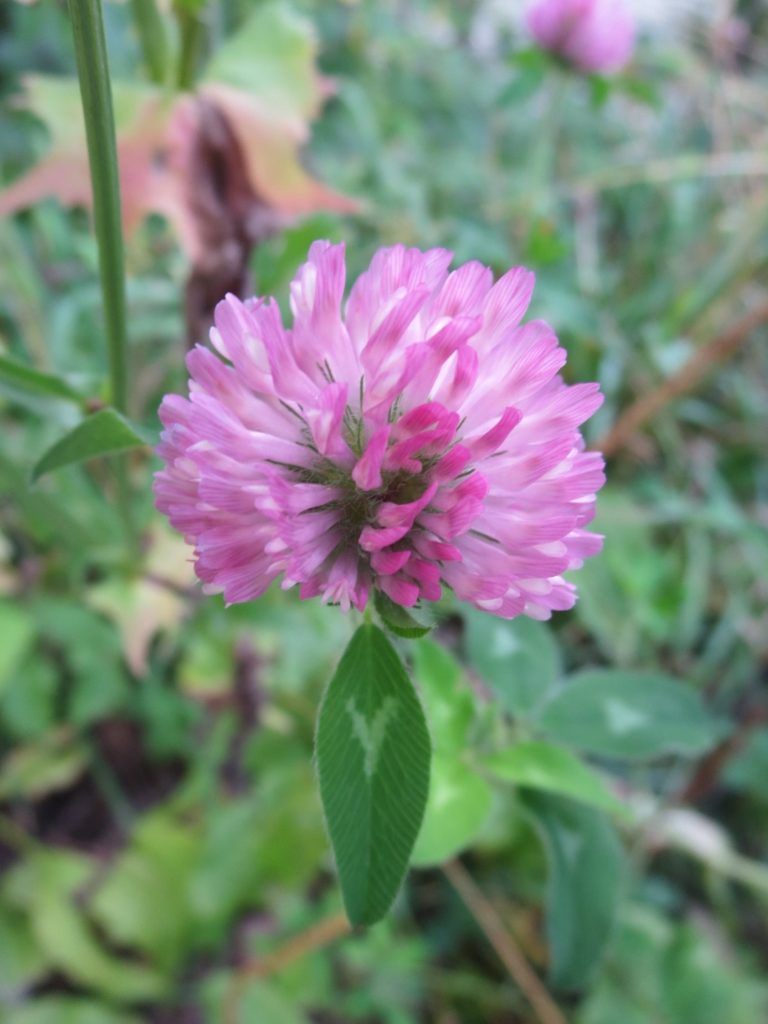
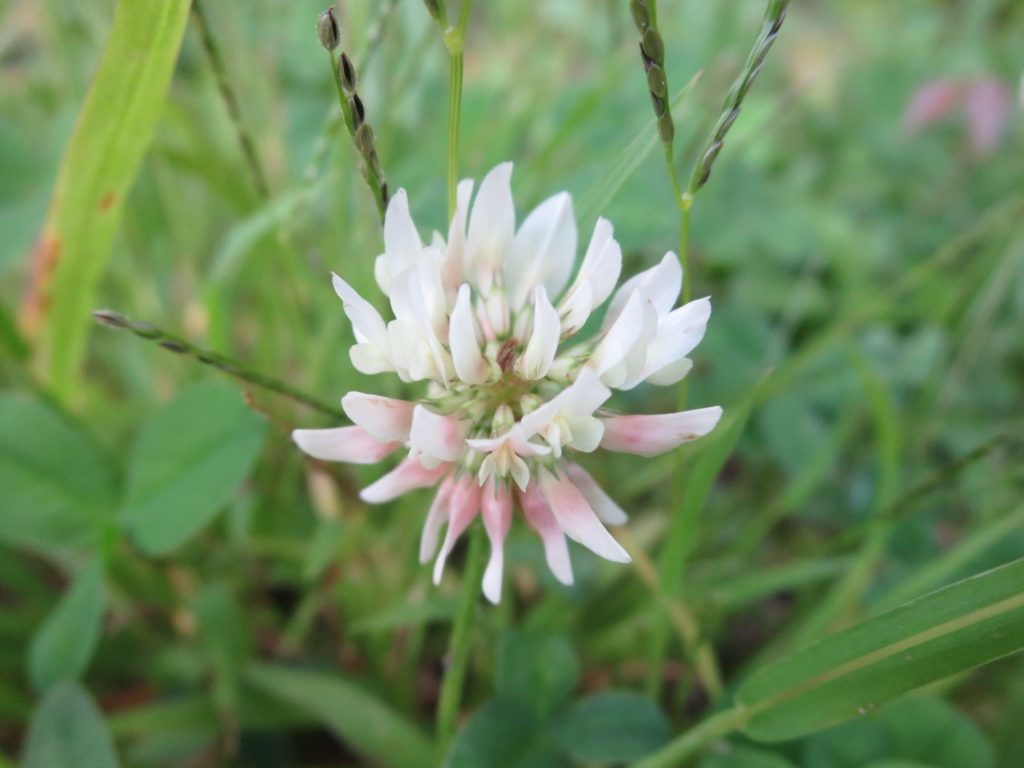
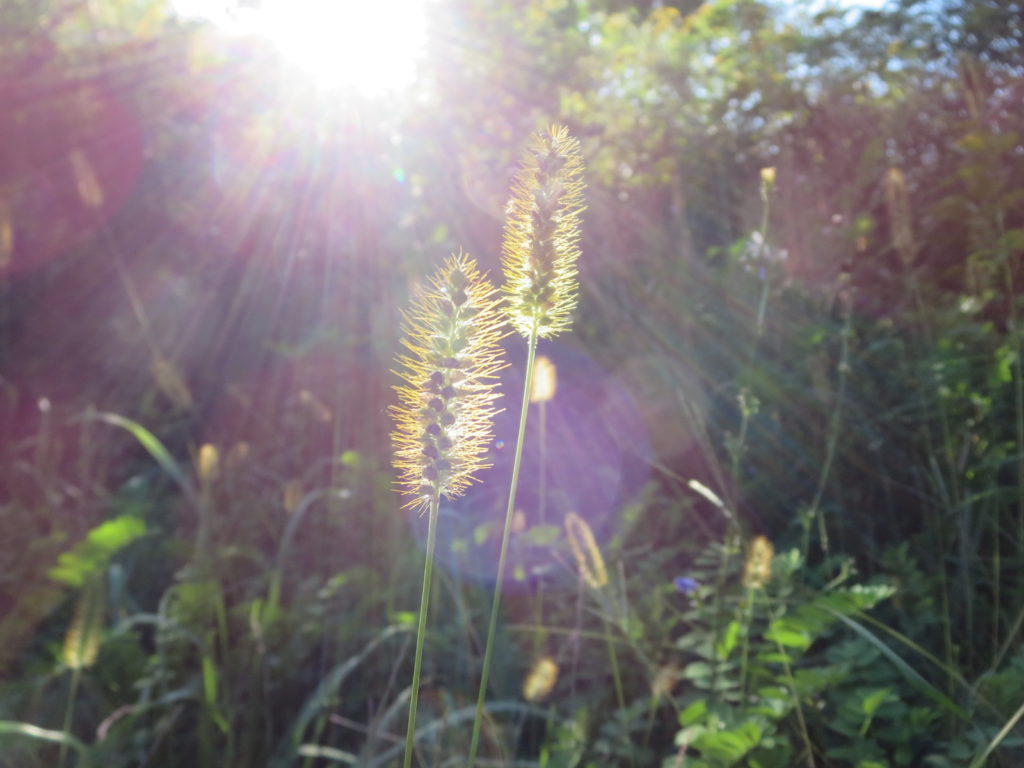
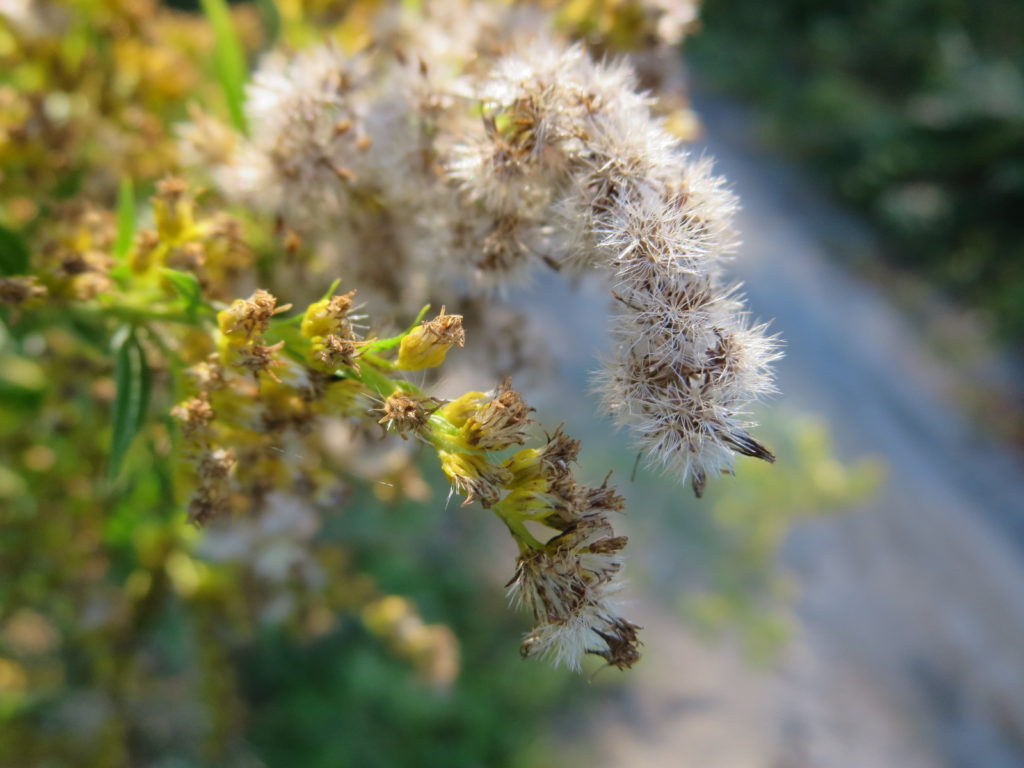
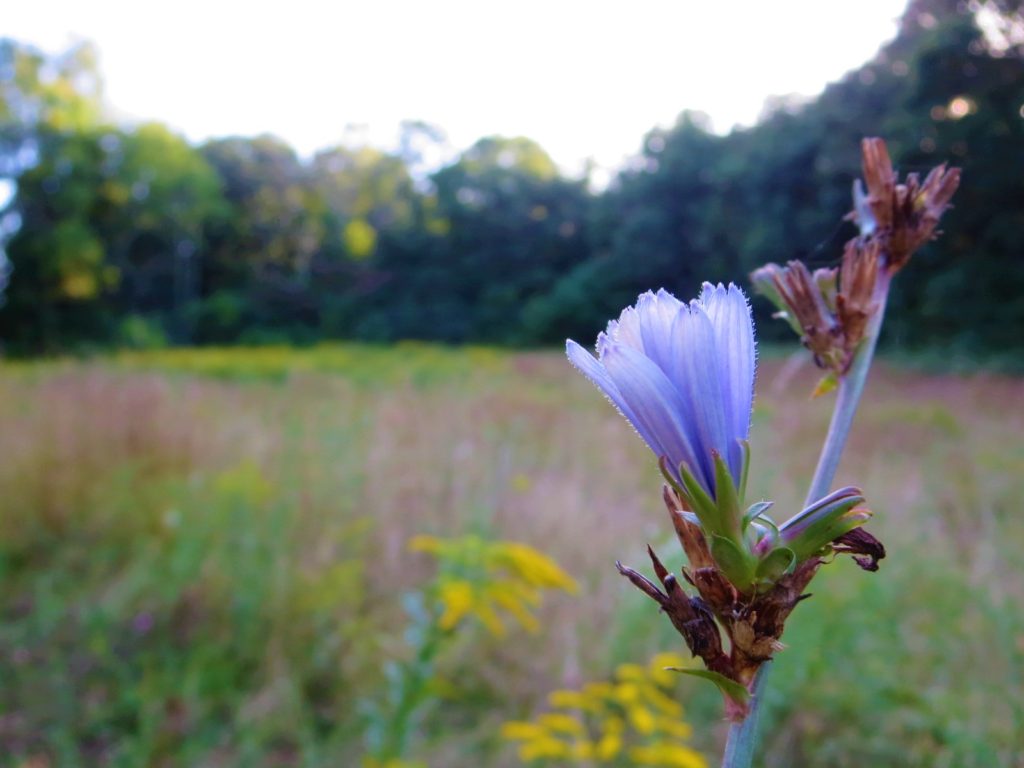
Today is the autumnal equinox, the first day of fall, which means my favorite season has officially begun. In celebration, I offer three “Farewell to Summer” pictures from my walks last week.
I spotted this peculiar hairy plant while out walking last week.
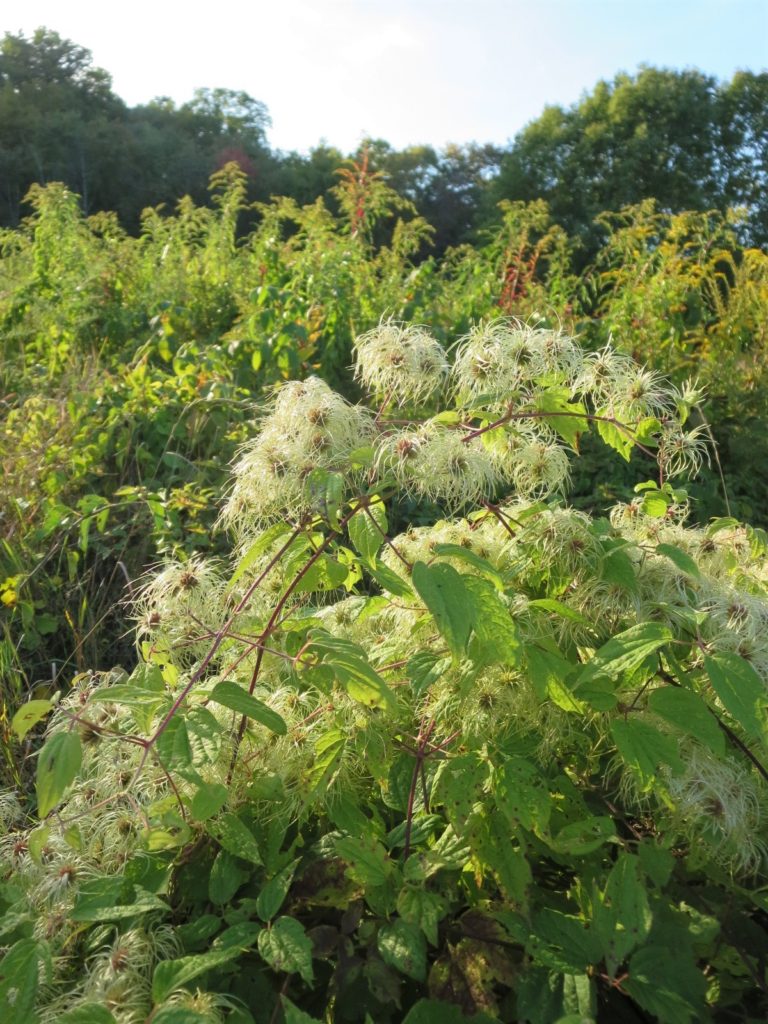
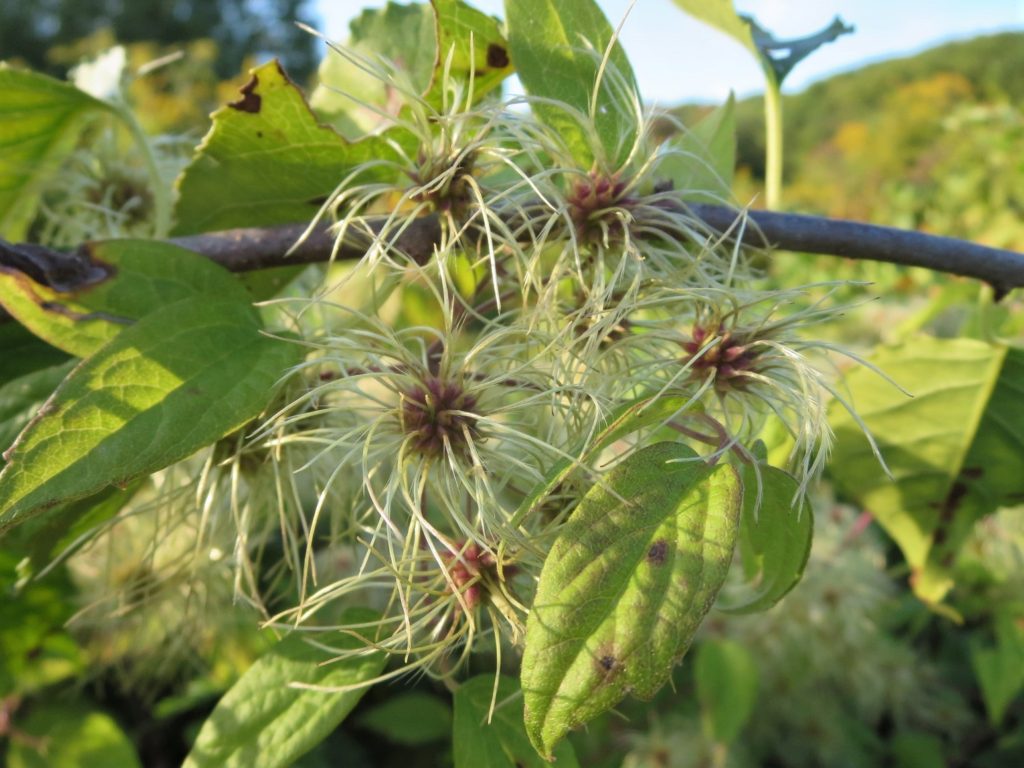
This was a tough plant to identify! I looked through my field guides multiple times. I ran numerous Internet image searches. Nothing looked exactly like this plant. I was beginning to get frustrated, but I refused to fail, and I did finally solve the mystery. The trick, for me, was to realize that it isn’t a shrub, that those hairy things are not flowers, and that this plant looks quite different when it’s in bloom.
Do you know what this Mystery Flower is? My best guess is in the comments.
© 2007-2026 Author of Blue-Footed Musings All Rights Reserved